
Chapters:

Chapter 2The Eternal Reality of the Soul's ImmortalityVerse 12

Sanskrit:

Sanskrit Vocals

Transliteration:

Anvaya:

Translation:

Click for Audio Language translations:

AryanGermanicHellenicOrientalRomanceSemeticSlavonic
Hindi
Bengali
English
Dutch
German
Greek
Chinese
Japanese
French
Spanish
Italian
Portuguese
Hebrew
Arabic
Russian
Serbian

Rudra Vaisnava Sampradaya:


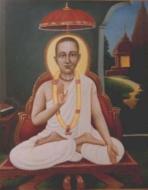
Visnuswami
Sridhara Swami's Commentary

The underlying reason these relations or any relations should never be considered objects of grief is now being given by the Supreme Lord Krishna stating: never at any time did I the Supreme Lord not exist. Even though the Supreme Lords eternally pure conscious spiritual body which is associated with His divine pastimes appears to come into existence and appears to cease to exist; He is now confirming unconditionally that He is beginningless, existing always eternally and that never did He nor Arjuna, nor all the kings, nor any living entity not exist, but existed always being a micro part of Himself and even so it is not that the living entities shall not exist hereafter for they certainly will exist, their eternal soul having neither birth or death, they should not be grieved for.

Brahma Vaisnava Sampradaya:


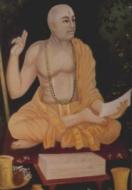
Madhvacarya
Madhvacarya's Commentary

Why is such a statement being put forth? Never was there a time when I was not. The Supreme Lord Krishna being eternal, such a statement is self evident; but it was only given to illustrate the point that even as the Supreme Lord is eternal as confirmed in the Vedic scriptures, even so, you and all these kings of the earth are also eternal.

Now begins the summation.

Lord Krishna informs Arjuna that due to fraternal feelings he was neglecting his own nature not to fulfil his duty according to righteousness. Is it because of the fear of losing his life or is it because of a lapse in consciousness? The physical body is in all respects subject to destruction so there is no purpose in being frightened, nor should there be any concern over the possibility of destruction of the individual consciousness because its nature is also eternal.

In the Skanda Purana it is stated:

There is no possibility of any destruction of the Ultimate Consciousness of the Supreme Lord the same similarly applies to the individual consciousness of all living entities. The Supreme Lord is eternal among the eternal, the Ultimate Consciousness among all individual consciousness, the One who so desiring manifests as the many. The connection and disconnection from the physical body is known as birth and death. Such is this reality for all living entities; but for the eternal and transcendental Supreme Lord this reality has no relevance and is in no way applicable.

Since the Supreme Lord may appear to have the destruction of His transcendental body and the transmigration of His transcendental consciousness to those who are deluded; this point is being clarified by the word tu in the verse beginning na tu evaham meaning but I certainly never. Although such a doubt did not arise in the case of Arjuna, the resplendent Supreme Lord Krishna elucidates this point for the benefit and welfare of all the worlds. Even though this dialogue is actually spoken in confidence, through the medium of Mahabharata by the mercy of Krishna Dvaipayana Vyasa it is disseminated throughout the universe.

Sri Vaisnava Sampradaya:


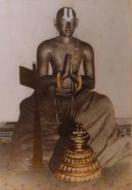
Ramanuja
Ramanuja's Commentary

The Supreme Lord Krishna reveals that for Him, as the Ultimate Controller, there is no such thing as having been in all of eternity before to the present. These designations do not apply to Him. He always was and always will be. As for Arjuna and all those present on the battlefield as well as all the countless trillions of living entities throughout billions of universes are all under the Supreme Lord Krishna's control and they as souls always were also. Nor will they ever cease to exist in the future. As ever-existent and eternal as the Supreme Lord Himself, the Ultimate Controller and Ultimate Consciousness is, the living entities are also ever existent and eternal due to the presence of the immortal soul.

It has thus been declared by the Supreme Lord Krishna Himself that individual souls are distinctly different from the Supreme Lord and that there are trillions of myriads of individual souls. The Supreme Lord used the occasion of Arjuna's bewilderment as an opportunity to impart the eternal knowledge of the Ultimate Truth with the object of removing his ignorance as well as to broadcast this eternal truth for all future living entities throughout all the universes of the material existence. In this way by making the distinctions of I, thou, we and they give the example and illustrate that the individual living entities are eternally distinct from the Supreme Lord.

Now an expose will be given regarding objection to the interpretation above and refutations thereof:

1) aupadhika-bheda-vada...the discrepancy which holds the doctrine that all duality is caused by limitations and restrictions which is called upadhi.

In this discrepancy it is propounded that the soul is different from the Supreme Lord due to upadhi, but the question which must be asked is why? The Supreme Lord Krishna clearly imparts monistic knowledge concerning the doctrine of duality in His instructions to Arjuna that totally transcends any limits or restrictions. How can upadhi's mundane material perspective influence the absolute and transcendental platform of the Ultimate Truth? These instructions of the Supreme Lord Krishna regarding the dualistic position that the living entities are many and that they are distinctly different from the Supreme Lord is a veritable axiom. That this is valid is confirmed fully by Vedas scriptures in their descriptions such as in the Katha Upanisad: the eternal among the eternals, the one among the many and in the Svetasvatara Upanisad: He who grants liberation.

2) ajana-krita-bheda-drishti-vada...the discrepansy which attests that the perception of duality is caused by ignorance and nescience which is called ajnana.

In this discrepancy the idea that the Supreme Lord who is omniscient, omnipotent and omnipresent could in any way be deceived in His instructions of the doctrine of duality due to ajnana is totally untenable and then to postulate that He practically and systematically taught it in such a sublime way to Arjuna also as to be a product of ignorance is completely contrary to intelligent thought and is itself situated in ignorance.

If one would still wish to be persistent in pursuing that the doctrine of duality is unreal and that everything is one, it would be wise to consider this salient point. When a person in the desert sees a mirage it appears to be water; yet upon approaching it can be perceived to be an illusion. Although the appearance of water may persist, no intelligent person would attempt to quench their thirst from it. In the same way if the Supreme Reality in Srimad Bhagavat-Gita of the duality of the Supreme Lord and the living entities was unreal then millions of living entities throughout the universes would not have been able to quench their thirst of knowledge from it and most certainly the Supreme Lord Krishna would never have proceeded to instuct this to Arjuna had it been false.

It is also preposturous to make the conjecture that the Supreme Lord was once ignorant and that He came to possess the knowledge that all is one after becoming aquainted with Vedic scriptures and that when he prescribed the doctrine of duality in Srimad Bhagavad-Gita, He was at that time in His ignorant stage. To maintain such a deplorable position is a contradiction in itself to the Vedic injunctions which declare in Mundaka Upanisad in reference to the Supreme Lord: He who is all knowing and all comprehending; He who is transcendent to the material nature and in Svetasvatara Upanisad: He whose knowledge, strength and full capacity for action are His nature.

Again it must be questioned that all the parampara or disciplic successions established from the Supreme Lord Krishna to the present acarya's in the four authorised Vedic sampradaya's have taught that the Supreme Lord is different from the living entities. If everything is one or a reflection of the one as those of monist persuasion maintain then the Supreme Lord would have had no need to instruct Srimad Bhagavat-Gita to Arjuna; for would anyone looking into a mirror at the reflection of themselves be foolish enough to impart any instructions to their self same reflection?

It is not possible for the monist belief that all is one to incorporate the reality that the Supreme Lord is different from the living entities into their hypothesis. According to them that which causes a dualistic nature is existing separate from the soul and was destroyed in the beginning of creation so that the oneness of all could replace it; but the monist contention again asserts that monism is eternal, thus even their own argument is contradictory in itself.

The monist claim that the soul is non-dual based on their hypothesis also completely negates the guru disciple relationship which is essential for performing Vedic rituals which cannot be performed with out following the injunction of initiation. Initiation cannot be consummated by one alone, there must be two. A preceptor who teaches and a disciple who receives the knowledge. The strength and whole foundation of the Vedic culture is based on this fact and the guru disciplic relationship has been enacted from time immemorial. Yet the monist hypothesis that souls are not individual and that knowledge, the source of knowledge and the cause of knowledge has no existence being dissolved as it were into the oneness of it all forever which is their contention. Thus the necessity of indoctrination or transmitting knowledge is unnecessary for them. But how did their own indoctrination become known without utilising the guru-disciple relationship. So in conclusion in whichever way they choose to argue the giving and taking of instructions in regard to their own indoctrination negates their own hypothesis that souls are all one and not plural being each individual one per living entity. Thus they flounder in their own sophistic misconceptions.

Kumara Vaisnava Sampradaya:


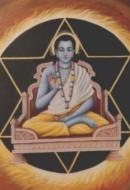
Nimbaditya
Kesava Kasmiri's Commentary

Next it might be questioned why do the wise not lament for the living or the dead? Lord Krishna here gives the reason to this establishing that the soul is eternal and not the physical body. The words na and eva meaning certainly never, destroys any conception of the physical body being able to ever be equated with the soul. As the Ultimate Soul among all individual souls it is not that the Supreme Lord did not exist before this time for He always existed. Similarly it is not that Arjuna and all the kings on the battlefield did not exist before this time, for they all certainly existed for the immortal soul transmigrates from body to body. By the authority of Bhagavad-Gita this verse spoken by the Supreme Lord Krishna refutes such statements as: and it is not again shall we all exist hereafter from the present time till the end to come, meaning that indeed we shall all exist. So this explains and puts into the proper perspective the dissolution of the material manifestation at the time of universal destruction. By negating the origin and destruction of the soul, its very existence is proved in the middle. In this way the souls existence is proven in all three being creation, maintenance and destruction. All souls are immortal being eternal and hence should never be grieved for.

Thus ends commentaries of chapter 2, verse 12 of the Srimad Bhagavad-Gita.

Verse 12


Copyright © Bhagavad-Gita Trust 1998-2005