Chapters



Sanskrit Vocal
Transliteration

Anvaya

Translation



Audio
 | Hindi | |
| Bengali | |
 | English | |
 | Dutch | |
 | German | |
 | Greek | |
 | Chinese | |
 | Japanese | |
 | French | |
 | Spanish | |
 | Italian | |
 | Portuguese | |
 | Hebrew | |
 | Arabic | |
 | Serbian | |
 | Russian |
| Chapter 2 | The Eternal Reality of the Soul's Immortality | Verse 48 | ||||||||||||||||||||||||||||||||||||||||||||||||
Chapters |
Sanskrit Vocal
Transliteration
Anvaya
Translation
| Audio
|
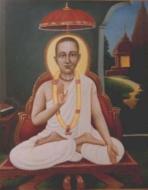
Rudra Vaisnava Sampradaya:
The fundamental question which might be raised is what then is factually to be done? This is now being answered in this verse. Established in the science of yoga perform all activities. Yoga is the science of the individual consciousness attaining communion with the Ultimate Consciousness. Being established by this yoga perform actions relinquishing attachment, motivation for rewards and depend solely upon the mercy of the Supreme Lord in all one's activities. Totally unconcerned about success or failure, attainment or non-attainment resultant surrender in righteousness all actions as an offering unto the Supreme Lord. This is the eternal path called yoga by the wise as it consists of fixed concentration of the mind.
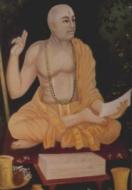
| Brahma Vaisnava Sampradaya:
The previous verse 47 is further clarified here. Yoga, equanimity is the methodology encouraged. Relinquishing desire and attachment to the rewards of actions while steadfastly remaining equipoised in either success or failure. This verily is what is meant by equanimity. Now begins the summation. The meaning of the word sangam is attachment. Attachment to what? The rewards of one's fruitive actions.
| ||
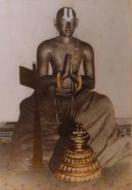
Sri Vaisnava Sampradaya:
Ramanuja.
Bhagavad-Gita: chapter 2, verse 49 Actions performed with fruitive motivations are far inferior to actions performed as a matter of duty. The mind of those whose actions are performed as a matter of duty are not disturbed or unbalanced by delusions of rewards gained or lost. The activities performed in spiritual intelligence removes all suffering in the world and leads to liberation from the material existence. Contrarily activities performed for the acquisition of rewards assuredly results in suffering and affliction in the material existence. Phala-hetavah are those who sole motivation is dictated be the prospects of reward. It should be understood that such living entities are krpanah or pitiable due to the fact but acting in this way they are imprisoned in the material existence unable to attain their spiritual nature.
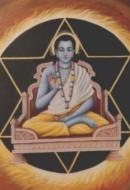
| Kumara Vaisnava Sampradaya:
What should one do? Lord Krishna states here to remain balanced and equipoised. Discard the mentality of being attached. Be balanced in either victory or defeat and perform your duties. Karmani refers to duties the plural usage of duties indicates various obligatory and occasional duties; but the optional duty is not to be included among these as they are not required. Otherwise there would be contradiction between the former and the latter statements. Yoga is explained by Lord Krishna Himself as being in the state of equanimity.
|