Chapters



Sanskrit Vocal
Transliteration

Anvaya

Translation



Audio
 | Hindi | |
| Bengali | |
 | English | |
 | Dutch | |
 | German | |
 | Greek | |
 | Chinese | |
 | Japanese | |
 | French | |
 | Spanish | |
 | Italian | |
 | Portuguese | |
 | Hebrew | |
 | Arabic | |
 | Serbian | |
 | Russian |
| Chapter 8 | Attainment of Salvation | Verse 23 | ||||||||||||||||||||||||||||||||||||||||||||||||
Chapters |
Sanskrit Vocal
Transliteration
Anvaya
Translation
| Audio
|
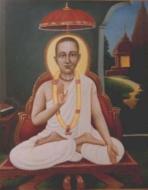
Rudra Vaisnava Sampradaya:
Thus it has been explained by Lord Krishna that the worshippers of the Supreme Lord having successfully attaining Him never return to the material existence, whereas others continue to revolve in samsara the perpetual cycle of birth and death. So the question might be asked, by which path is one free from samsara and by which path does one remain subject to samsara? Clarification of these questions is being answered in this verse. The construction of the verse is as follows: Lord Krishna first speaks of time declaring He will tell of the time when the aspiring yogi or one perfecting the science of the individual consciousness attaining communion with the ultimate consciousness departs his body at the moment of death and is free from samsara and the time when the departing yogi at the moment of death still remains subject to samsara. Here the occurrence of death at special times like the six months of the waxing light of the sun in its northern course is not intended according to the evidence established in the Brahma Sutras. In Brahma Sutra IV.II.XVIII it states: The atma or soul of one who has realised the brahman or spiritual substratum pervading all existence, when departing their body follows the rays of the sun. In Brahma Sutra IV.II.XX it states: Because of this brahman realisation the atma follows the suns rays even during the six months when the sun is waning in its southern course. Therefore the reference to time is in regard to the path attained under guidance of the presiding demigods identified with a specific time whose service is to conduct the atma. This is what is denoted by the word kale referring to the dictates of the presiding demigods of the different time periods. Those who have realised the brahman and those who are performing yagna or propitiation and worship to the Supreme Lord to eventually realise the brahman are two different categories and have two different destinations. At whatever time period one who has realised the brahman departs their body; be it day or night, the moon waxing or waning in its monthly cycle, the sun waxing in its northern course or waning in its southern course in its yearly cycle; such a person goes directly to Brahmaloka which is the highest material planet to finish perfection. Those performers of yagna and ritualistic activities who have not realised the brahman go to Svargaloka the heavenly planets to enjoy for millenniums the rewards of their ritualistic activities; but when these rewards have been used up such performers of yagna are immeadiately recycled back into samsara and reborn again in this world of mortals to work out and finish their karma.
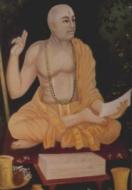
| Brahma Vaisnava Sampradaya:
In this verse Lord Krishna speaks of the presiding demigods who when the atma or soul departs the body at the moment of death assists one in achieving moksa or liberation from material existence or conducts one back into samsara the perpetual cycle of birth and death. The term yatra kale meaning according to the dictates of the presiding demigod, is only a qualifying statement. Since through the demigods like Agni in charge of fire are also avenues, Lord Krishna discourses on them. Now begins the summation. The demigods presiding over time are those who assist one after they depart their physical body at the time of death. Even though demigods such as Agni are not in charge of actual time as thought of in general usage. Those who depart their bodies in death during daksinayana or when the sun is in its waning southern course receive the respects of their departed ancestors and acquiring the beautiful, youthful forms of the demigods attain the corresponding world they have qualified for by their karma or reactions to previous life activities. But for one who has realised the brahman or spiritual substratum pervading all existence, it is they who travel along the rays of the sun and reach the highest material planet of Brahmaloka where they complete their perfection. Others go to the heavenly planets to enjoy the rewards of their pious activities from the previous life and when they are finished they are reborn again in the worlds of mortals. Thus for one who has realised the brahman there is no return for them either if death comes during uttarayan when the sun is in its waxing northern course or if death comes during daksinayana. So the wise have confirmed that those who have realised the brahman do not return to the world of mortals regardless of when they depart their physical bodies at the time of death. The Padma Purana states: One who has realised the brahman attains the Supreme destination regardless of when they deaprt their body at the time of death.
| ||
Sri Vaisnava Sampradaya:
Now the journey which is known as archir-adi or the path beginning with light which is common to the jijnasur the knower of atma tattva or soul realisation as well as the bhakta or loving devotee of the parama purusa the supreme personality. The Vedic scriptures declare that the archir-adi is the path by which both these types of aspirants travel at the time of death. It is the road travelled by which there is no returning to the worlds of mortals. The Vedic scriptures when explaining panca-agni-vidya the system of the five fires states: Those who have realised the atma or soul, those who meditate on the Supreme Lord with full faith, those who worship the Supreme Lord with bhakti or loving devotion. Those who do these activities alone in a private place reach the archi the deity of light, from there to the deity of day etc. as explained in the Chandogya Upanisad V.II-XV beginning tad ya ittham vidur. One who travels by the archi-adi path reaches Parabrahma the supreme being and thus returns not to the material worlds. This is confirmed in the Chandogya Upanisad IV.XV.IV beginning enan Brahma gamayati which states: He the servitor named Amanava to the appropriate demigod, escorts the souls who have achieved moksa or liberation from material existence to Brahmaloka from where they are no longer subjected to reincarnation in samsara the perpetual cycle of birth and death.
Those who have realised the atma are not in the same category as those aspirants who diligently practice the para-vidya the supreme knowledge declared by Brahma because success in that is determined first by atma tattva or soul realisation. Otherwise if there was no difference between the two then it would have been unnecessary for Lord Krishna to mention the path leading to rebirth and the path leading to no rebirth. The Chandogya Upanisad V.IX.I states: Thus do the waters come to be designated as the Purusa in the fifth oblation. Those who have performed righteous deeds and those who have performed abominable deeds receive physical forms in conjunction and accordance with these activities and are fashioned out of the five elements in which water is predominant. The atma is not these forms but just embodied in these forms by the dictates of karma or reactions from past actions. So this is the distinction and those who understand the reality of atma in this way qualify for the archi-adi and achieving moksa or liberation no longer return to the realms of mortal existence. The conclusive understanding is that non-intelligent nature being material like the physical body is always fit to be discarded and the intelligent nature being spiritual like the atma is always fit to be embraced. Those who follow the spiritual nature and realise the atma travel the path of archi-adi and return not to samsara the perpetual cycle of birth and death. The previous passage that the servitor Amanava escorts the souls to Brahmaloka is applicable to both the followers of the spiritual nature being the jijnasuh or the soul seeker and the jnani the god seeker, as the meditation of the former consists of reflecting on the atma, devoid of matter without any material conceptions as being one with the brahman or the spiritual substratum pervading all existence,. This conforms with the Vedic axiom known as tat krata-nyaya or that similar efforts yield similar results; therefore when realisation of the brahman is the focus of one's aspirations then one devotes themselves to contemplation of the brahman. So the realisation of the brahman is achieved by dint of the aspirants contemplation on the brahman. How exactly is the jijnasur to contemplate the brahman is that they look at the brahman as ancillary to the atma which is the primary goal. Whereas the jnani meditates on the brahman as the effulgence of the Supreme Lord Himself and looks at the atma as ancillary to that, the Supreme Lord being the primary goal. Giving credence to the fact that the atma or soul is in reality part and parcel of the eternal ultimate Supreme Being as well as the brahman is verified in the Brihad- aranyaka Upanisad V.VII.XXII beginning ya atmani tisthan which states: The brahman abides in the atma, by whom the atma is the body.
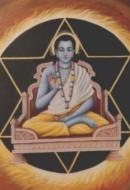
| Kumara Vaisnava Sampradaya:
Lord Krishna has declared that those who realise the brahman or the spiritual substratum pervading all existence and also those who attain realisation of the Supreme Lord are not subjected to samsara the perpetual cycle of birth and death and no longer take birth in the worlds of mortals, whereas others must take birth there. There are the route of the celestials and the route of the Manes or ancestors. Now the question to be known is by what route does one not take birth again? Lord Krishna introduces both paths beginning with the words yatra kale meaning by which time. Here the word kale refers to the route taken by the soul departing the body of an aspirant and escorted by the servitor of the presiding demigod of the day, month, year, etc. who are the transporting demigods. The names Agni and Jyotis are referring to the presiding demigods of fire and illumination. They are not referring to time because in the Chandogya Upanisad IV.XV.V it states: From a year to the sun god, etc. The presiding demigods such as Surya the sun god are stated in the conclusion which is appropriate as the preceding and succeeding names are prescribed for the demigods and thus a day, month, etc. stands for their respective times of these demigods. The purport is that the aspirants taking the route of the respective demigods are twofold: Those who have perfected the path of spiritual knowledge and those who have perfected the path of detached renunciation. Those who have reached perfection by spiritual knowledge do not take birth again. Those who even though have perfected detached renunciation still must take birth again.
|