Chapters



Sanskrit Vocal
Transliteration

Anvaya

Translation



Audio
 | Hindi | |
| Bengali | |
 | English | |
 | Dutch | |
 | German | |
 | Greek | |
 | Chinese | |
 | Japanese | |
 | French | |
 | Spanish | |
 | Italian | |
 | Portuguese | |
 | Hebrew | |
 | Arabic | |
 | Serbian | |
 | Russian |
| Chapter 12 | The Path of Devotion | Verse 18,19 | ||||||||||||||||||||||||||||||||||||||||||||||||
Chapters |
Sanskrit Vocal
Transliteration
Anvaya
Translation
| Audio
|
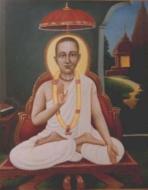
Rudra Vaisnava Sampradaya:
12
13 One who is impartial to friend and foe alike and is free from the influence of dualities such as honour and dishonour, pleasure and pain, happiness and misery, who is unattached to anything other than bhakti or exclusive loving devotion to Lord Krishna, who is satisfied with what comes unsolicited of its own accord, who is firm in equanimity, of controlled speech and confidence in the teachings of the Vedic scriptures is very dear to Lord Krishna
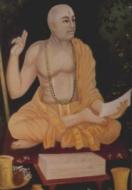
| Brahma Vaisnava Sampradaya:
In the previous verse Lord Krishna speaks that His devotee who is subhasubha parityagi meaning fully renouncing the results of pious and impious actions and their derivatives of merits or demerits. The special attribute being parityagi or full renunciation. In this verse there may appear to be repetition in speaking of freedom from duality such as pleasure and pain, joy and grief, praise and censure etc. but this is to emphasise the equanimity that comes from renunciation. When something is repeated its importance is being asserted to emphasise its value and to remind His devotees that renunciation of the desire for rewards is essential. Now begins the summation. Full renunciation is renouncing the performance of all actions that do not support bhakti or exclusive loving devotion to the Supreme Lord Krishna. This can also mean renouncing all actions that do not please Lord Krishna. For example Lord Krishna is not pleased by pride but He is pleased by humility. He is not pleased by one who seeks recompense for their devotion to Him but He is pleased by one seeks no reward for their devotion to Him. One who does not desire anything except bhakti is known as truly renouncing all actions and the results of all actions as both pious and impious activities result in karma or good and bad reactions from past actions.
| ||
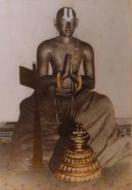
Sri Vaisnava Sampradaya:
16 The absence of hate towards any being in general has already iterated by Lord Krishna in verse 13 of this chapter with the word advesta meaning free of hatred but that is in a general sense towards every being. The equanimity mentioned here is of a more profound nature that of keeping one's equanimity when seeing one in front of them face to face. The word aniketah means unattached to home or fixed residence due to being firmly attached to bhakti or exclusive loving devotion to the Supreme Lord. Equally balanced in praise and censure, happiness and misery, pleasure and pain etc. Such a devotee of the Supreme Lord Krishna is very dear to Him.
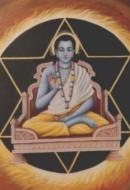
| Kumara Vaisnava Sampradaya:
One who is impartial to friend and foe alike, free from the influence of passion and hatred as well as honour and disgrace, who remain balanced in heat and cold, pleasure and pain and is free from attachment to anything not supportive of bhakti or exclusive loving devotion to the Supreme Lord Krishna, who is given to silence being of controlled speech, is content with whatever comes along unsought by its own accord without attachment to a fixed residence, of sober and stable mind and determinate in the teachings of the Vedic scriptures, such a devotee of Lord Krishna is very dear to Him.
|