Chapters



Sanskrit Vocal
Transliteration

Anvaya

Translation



Audio
 | Hindi | |
| Bengali | |
 | English | |
 | Dutch | |
 | German | |
 | Greek | |
 | Chinese | |
 | Japanese | |
 | French | |
 | Spanish | |
 | Italian | |
 | Portuguese | |
 | Hebrew | |
 | Arabic | |
 | Serbian | |
 | Russian |
| Chapter 9 | Confidential Knowledge of the Ultimate Truth | Verse 22 | ||||||||||||||||||||||||||||||||||||||||||||||||
Chapters |
Sanskrit Vocal
Transliteration
Anvaya
Translation
| Audio
|
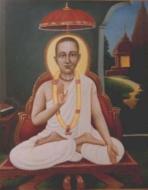
Rudra Vaisnava Sampradaya:
This verse clearly and distinctly confirms that the devotees of the Supreme Lord Krishna who are completely absorbed in reflecting upon Him and who have no other desire then pleasing Him by activities or by meditation are blessed by His grace to the degree that their welfare, their maintenance, their protection, their achievement of moksa or liberation from the cycle of birth and death as well as their ascension to Him in the eternal spiritual realms are all sanctioned and arranged by the Supreme Lord Himself for His exclusive devotees who never even think of asking anything in return for what they offer with devotional love.
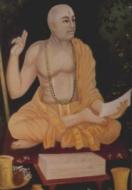
| Brahma Vaisnava Sampradaya:
The word ananyas means exclusivity. It refers to those who are always focused on the qualities and pastimes of the Supreme Lord Krishna or any of His authorised incarnations and expansions revealed in Vedic scriptures. The Gautama Parva states: Renouncing all desires in the mind, when nothing else remains other than remembrance of the pure, primeval Supreme Lord they the meditators who possess equanimity in all respects are verily ananya and attain Him. In the Moksa Dharma it states: That by Superior desire for the Supreme Lord with all faculties and senses concentrated in communion with Him time and space is transcended and it is possible to perceive the Supreme Lord within the heart enveloped in a halo of light.
| ||
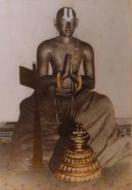
Sri Vaisnava Sampradaya:
The word ananyas meaning exclusivity refers to those who have excluded themselves from all other desires except the Supreme Lord Krishna who is their sole source of joy and only center of hope. Always meditating upon Him day and night in terms of his qualities and pastimes as well as what He may be doing and reflecting in relation to them. Deprivation of such meditation and reflections would be tantamount to cessation of their very lives, hence incessant remembrance of the Supreme Lord is wonderful for them in and of itself. The mahatmanas or great, noble beings of this description who devoutly contemplate the Supreme Lord in all His glory and splendour as the source of all glory and splendour throughout the cosmos all over creation and furthermore who contemplating Him thus intensely aspire for eternal communion and association with Him. Then the Supreme Lord Himself accomplishes that yoga or the attainment of the individuals consciousness in communion with the His ultimate consciouness. The word kseman means perpetually this denotes that it is eternal and indicates that there is no return back to the material existence for those so exclusively devoted.
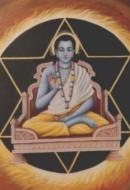
| Kumara Vaisnava Sampradaya:
It has been clearly established by Lord Krishna that those who perform Vedic rituals with self interest motives are unable to extricate themselves from samsara or the endless cycle of birth and death. Whereas the devotees of the Supreme Lord Krishna being completely free from self interest and ulterior motives accomplish the four goals of human existence artha or wealth, kama or pleasure, dharma or righteousness and moksa or liberation by the grace of the Supreme Lord Himself. The word ananyas meaning exclusive denotes that such devotees have no other goal than the Supreme Lord, thinking only of service to Him day and night with full heart and soul. But because they are so fully devoted to Him they sometimes fail to take care of the realities of the body, senses and mind and so in this case the Supreme Lord arranges for their maintenance Himself supplying the necessities they need to exist. He also protects them in all respects from any situation that may obstruct their attainment of Him before the end of their life.
|