Chapters



Sanskrit Vocal
Transliteration

Anvaya

Translation



Audio
 | Hindi | |
| Bengali | |
 | English | |
 | Dutch | |
 | German | |
 | Greek | |
 | Chinese | |
 | Japanese | |
 | French | |
 | Spanish | |
 | Italian | |
 | Portuguese | |
 | Hebrew | |
 | Arabic | |
 | Serbian | |
 | Russian |
| Chapter 2 | The Eternal Reality of the Soul's Immortality | Verse 37 | ||||||||||||||||||||||||||||||||||||||||||||||||
Chapters |
Sanskrit Vocal
Transliteration
Anvaya
Translation
| Audio
|
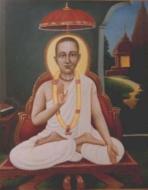
Rudra Vaisnava Sampradaya:
The previous statement given by Arjuna in Chapter 2, verse six, about his concern of not knowing which is better: to conquer the enemy or be conquered by the enemy, is now being clarified by the Supreme Lords instruction in this verse, that by either conquering he will win dominion of the earth or by being conquered he will directly attain the heavenly spheres.
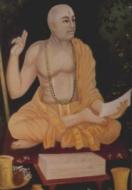
| Brahma Vaisnava Sampradaya:
If slain in battle while fighting bravely a ksatriya will certainly attain the heavenly spheres. It is also stated in the Vedic scriptures that if a ksatriya is victorious in battle what will be gained is dominion of the Earth and at the end of the life the heavenly spheres are guaranteed as well. Thus those who fight bravely in battle and are undefeated acquire more merit than those who are defeated.
| ||
Sri Vaisnava Sampradaya:
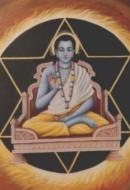
| Kumara Vaisnava Sampradaya:
So in order to protect both the Earth and the heavenly realms it is better for a mighty warrior to face his enemies and fight. This Lord Krishna emphasises with the word hata meaning slain showing that slain or not slain there is benefit in both. So by this Arjunas previous doubt of not knowing what is better to slay or be slain and will they have victory or not are eradicated as both conclusions give benefit. So Arjuna should rise up and fight.
|